

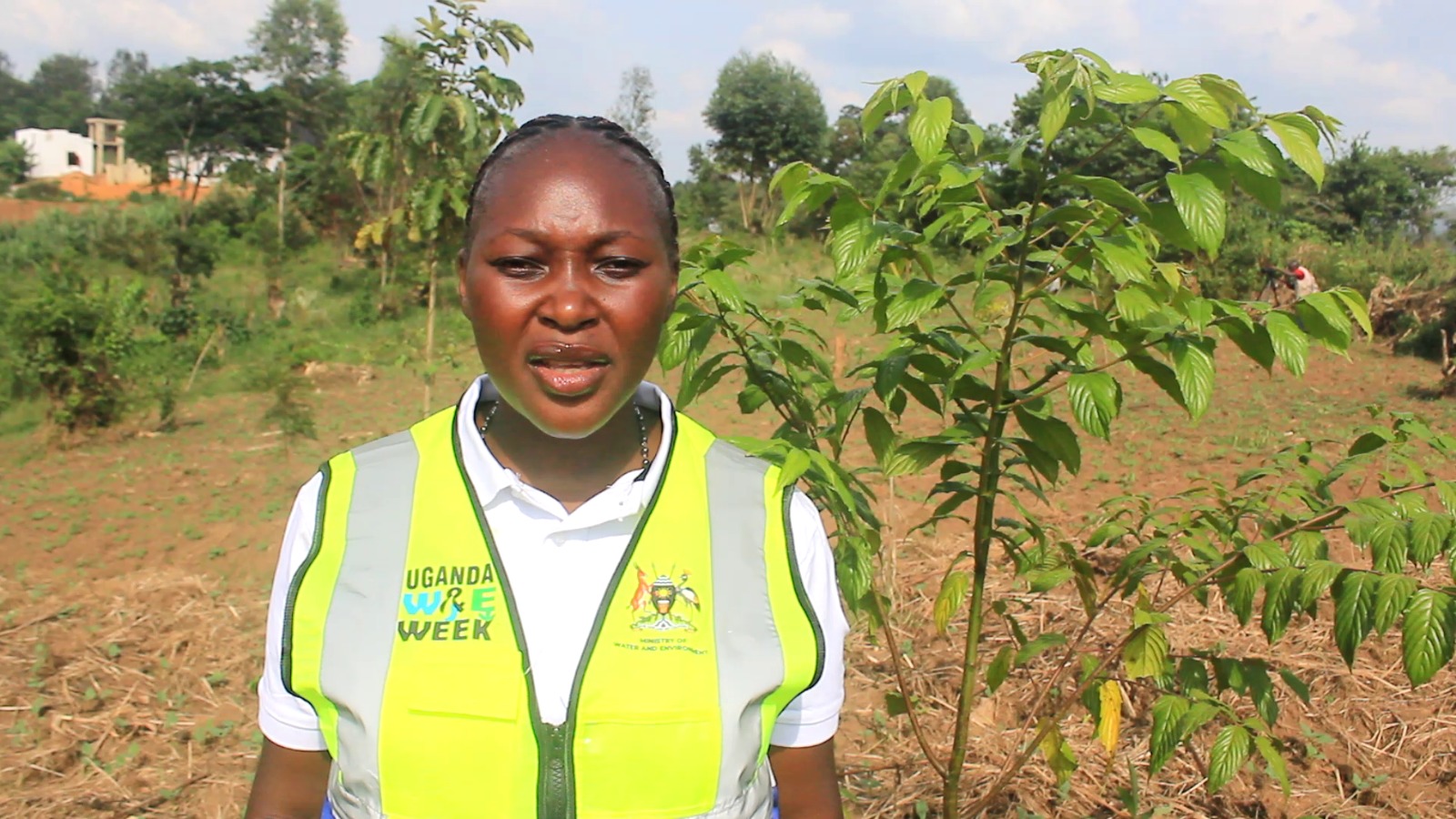
Ibanda District has launched the second phase of a major tree-planting initiative aimed at restoring degraded forests in the Mpanga catchment, part of broader efforts to protect water resources and promote sustainable land management.
The phase, launched on Tuesday, is spearheaded by the Ministry of Water and Environment through the Albertine Water Management Zone and funded by the Conrad N. Hilton Foundation.
It targets the restoration of 90 hectares of degraded land, building on the 40 hectares restored during the first phase last year.
Speaking at the launch, Immaculate Atuhaire noted that the overall project initially aimed to restore 180 hectares.
“In the first phase launched last year, we targeted 180 hectares but managed to restore 40 hectares on both individual and institutional land, including churches and schools,” Atuhaire explained. “With this second phase now underway, we are focusing on restoring an additional 90 hectares as we work towards achieving the overall target.”
Monitoring conducted in December 2025 by ministry and district officials showed encouraging progress in the areas planted during phase one.
“The trees that were planted are progressing well, and this reflects partial success of the project so far,” she said. Atuhaire emphasized that the initiative goes beyond tree planting, highlighting its role in restoring the Mpanga River ecosystem.
“Our goal is to ensure full restoration of River Mpanga through reforestation and sustainable environmental practices,” she added.
Happy Herbert Mayanja called on communities living near the restoration areas to take responsibility for protecting the planted trees.
“I urge residents adjacent to these areas to take care of the trees until they fully grow. Their survival depends on the commitment of the community,” Mayanja said, encouraging interested residents to register with the district to benefit from the program.
“Those who are willing to plant trees should register with the district so that the ministry can support them with seedlings.”
Godfrey Mbetegyereize urged the public to embrace tree planting as a long-term investment in environmental conservation.
“Let us all take part in this initiative by planting more trees to secure a better environment for future generations,” he said.
Despite ongoing restoration efforts, Uganda faces significant deforestation challenges. Current statistics show forest cover stands between 11% and 13% of the country’s total land area, an improvement from about 8%–9% in 2020, but still below the 24% recorded in 1990.
The country loses an estimated 122,000 hectares of forest annually, largely due to agricultural expansion and charcoal burning.
The Mpanga catchment restoration project forms part of national efforts to reverse environmental degradation and safeguard critical natural resources.
